

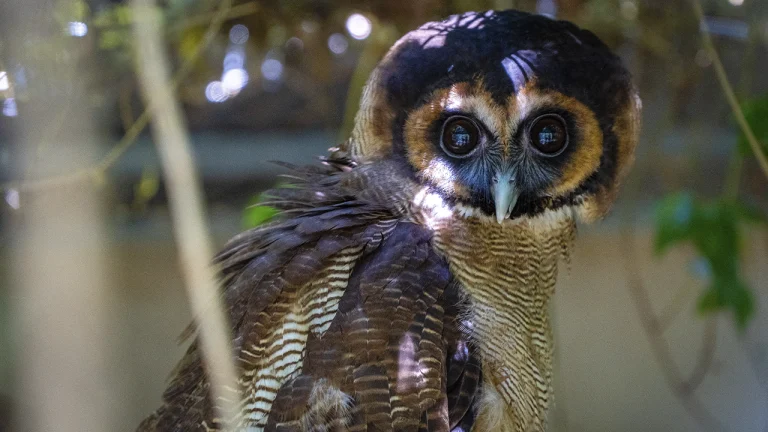
(Strix woodfordii): an emblematic African owl
The African wood owl, also known as the spotted owl, is a medium-sized nocturnal bird of prey native to sub-Saharan Africa. Its range extends from Senegal to South Africa, mainly inhabiting open forests, savannas, rocky areas, and plantations.
Distribution and habitat
This owl is characteristic of regions with tree vegetation and open spaces where it can easily hunt. It prefers areas with abundant tree or rock cavities for nesting.
Description and behavior
The African wood owl measures between 30 and 36 centimeters and weighs between 240 and 350 grams. Its plumage is dark brown with light streaks, it has bright yellow eyes, and a rounded head without tufts. It is mostly nocturnal, although it can be active at dawn and dusk. They form stable pairs and usually nest between July and October, laying 1 to 3 eggs that are incubated for about 31 days.
Diet
It is a versatile predator that feeds on insects, small mammals, reptiles, and birds. Its varied diet allows it to play a key role in controlling prey populations and maintaining the ecological balance of its environment.
Conservation
Currently, the African wood owl is classified as “Least Concern” by the IUCN. However, habitat loss and human persecution represent potential threats in some regions.


