

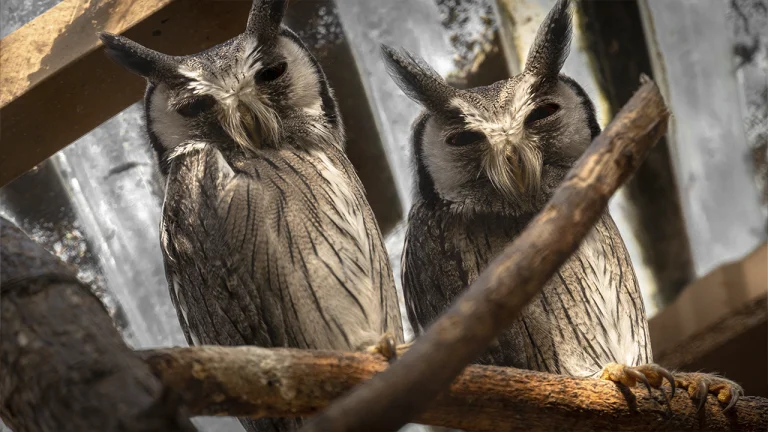
(Ptilopsis leucotis): a small African owl with an unmistakable face
The white-faced scops owl, also known as the white-faced owl, is a small nocturnal raptor native to sub-Saharan Africa. It measures between 22 and 28 cm and weighs 185 to 220 grams. Its most striking feature is its white face bordered in black, which contrasts with its mottled plumage and gray ear tufts.
Distribution and habitat
This species is widely distributed from the Sahel to South Africa, inhabiting savannas, open woodlands, and thorny scrublands. It prefers areas with hollow trees or rock crevices where it can nest and rest during the day.
Behavior and reproduction
The white-faced scops owl is mainly nocturnal and solitary, although it usually forms stable pairs during the breeding season. It is known for its unique defensive behavior: when threatened, it stretches its body and feathers to blend in with tree bark. It nests in natural cavities and typically lays 2 to 3 eggs, with an incubation period of around 30 days.
Diet
Its diet consists of large insects such as beetles and grasshoppers, as well as small mammals, sleeping birds, and reptiles. This owl is an efficient nocturnal predator that plays a key role in pest control.
Conservation
Classified as “Least Concern” by the IUCN, its main threat is habitat loss due to deforestation and agricultural expansion.


